
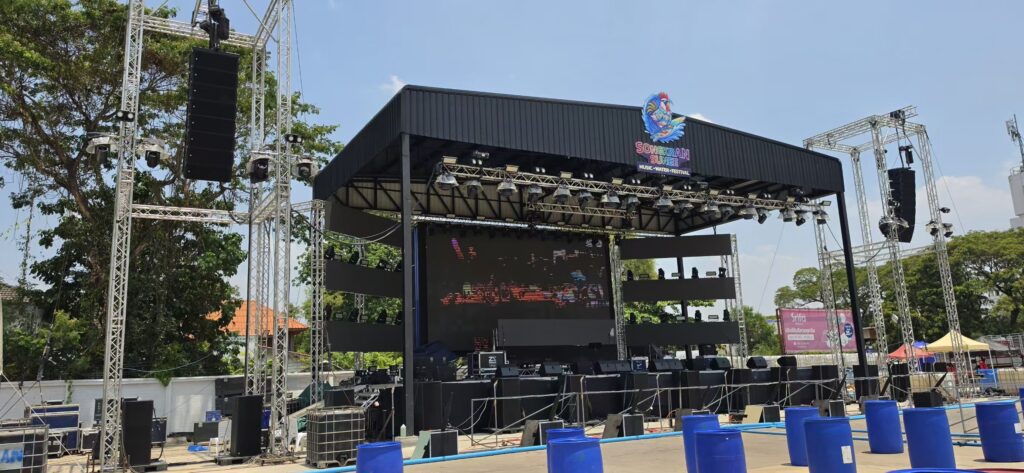
PROSTAGE Secrets to Creating Breath-Taking Concert Stage Lighting Design
Creating a live show that lingers in the minds of thousands of screaming fans requires more than just powerful amplifiers and energetic performances. It demands an immersive visual atmosphere where shadows and photons dance in perfect synchronization with every beat. This complex spatial choreography is known as concert stage lighting design—the art of using controlled illumination to shape emotional arcs, define physical spaces, and electrify the live entertainment environment. Whether staging a massive stadium rock show under the open sky or producing an intimate theater performance, understanding how to lay out your rigs is crucial to establishing a captivating sensory connection between the performers and the crowd.
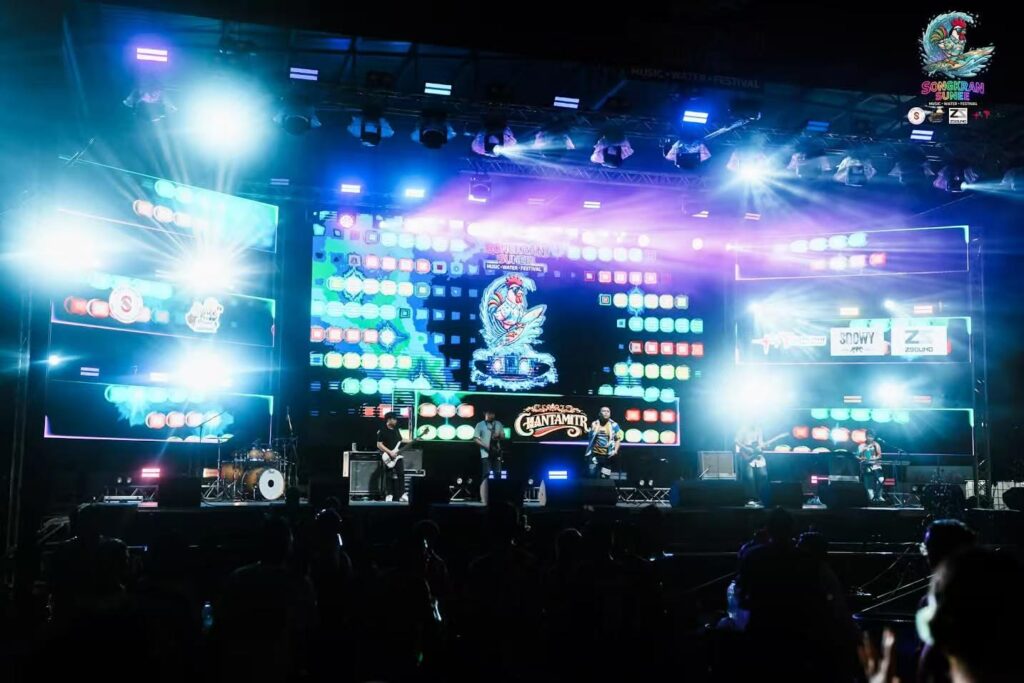
A stunning show starts with a clear visual blueprint. Laying out a professional rig involves balancing three-dimensional layers: background wash, mid-ground key elements, and sharp foreground beams to achieve a balanced concert stage lighting design. In modern arena set designs, programmers rely heavily on high-speed fixtures to slash through the dark and slice across the humid haze.
The Fundamentals of High-Impact Concert Stage Lighting Design
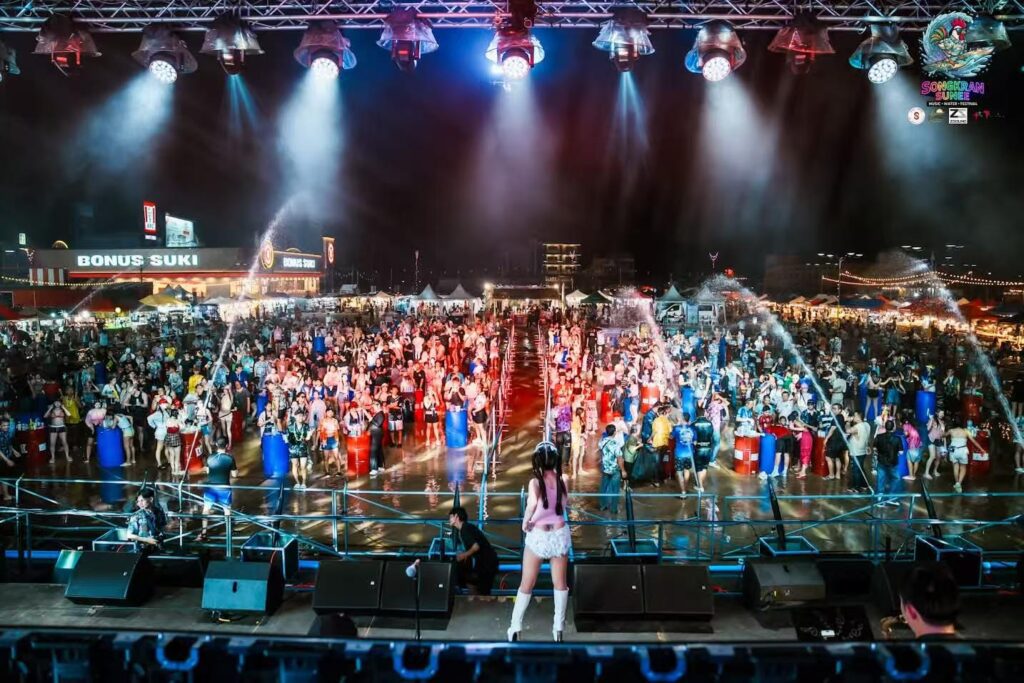
To construct an unforgettable live experience, a lighting director must master the distribution of light across several physical vectors. The primary goal of any robust concert stage lighting design is to establish depth. For high-energy musical events, specialists often deploy advanced beam moving heads like the legendary BEAM-380, which is built around an Osram Sirius HRI 371W lamp source. This fixture features a razor-sharp 2.5-degree beam angle (the measurement of the light cone’s narrowness and tight focus), allowing it to cast dense, solid pillars of saturated light that cut through heavy stage fog without scattering.
Furthermore, the integration of a dual-prism system (an optical mechanism containing a 16-facet single prism and a multi-facet 8+16+24 honeycomb prism that can stack together to create 11 distinct refractive patterns) multiplies a single light source into a sprawling array of moving elements. These geometric arrays map spectacular, spinning aerial dynamics across the arena ceiling, creating a sense of massive scale and endless space that keeps the audience captivated.
By blending these beam-cutting effects with low-profile background washing, you transform a flat, two-dimensional platform into a deep, three-dimensional dreamscape. This integration of textures is a hallmark of premium concert stage lighting design.
Orchestrating Fixtures for Dynamic Concert Stage Lighting Design
To prevent a show from becoming visually fatiguing, your concert stage lighting design must transition seamlessly between high-octane strobe chases and delicate, color-corrected theatrical moments. For theatrical scenes, intimate acoustic sets, or spotlighting lead vocalists, directors shift their focus from raw power to absolute beam control. This is where LED profile cutting lights, such as the massive PER-1000 and its compact sibling the PER-700, become indispensable.
Equipped with a highly efficient 1000W LED module and a versatile linear zoom of 5 to 50 degrees, these framing profiles allow programmers to shape the light with surgical precision. Utilizing an omnidirectional gobo cutting system (a built-in mechanism composed of four independent, motor-driven framing blades that can rotate up to 120 degrees), operators can trim the light beam to fit the exact geometric contours of the stage. This prevents unwanted spill over projection screens or acoustic panels, ensuring the focus remains strictly on the performer.
Moreover, because these fixtures support a high CRI (color rendering index, which is a quantitative measure of a light source’s ability to reveal the true colors of objects compared to natural daylight) of over 90, skin tones appear rich, natural, and completely lifelike under the cameras. This is a critical factor for modern high-definition live streaming and broadcast environments.
Precision Control and Atmosphere in Concert Stage Lighting Design
Behind every flawless cue lies a sophisticated control infrastructure. Modern concert stage lighting design relies on the DMX512 protocol (the international digital communication standard used to control stage dimmers, moving heads, and auxiliary special effects) to orchestrate hundreds of fixtures simultaneously. For complex outdoor festival environments, where laying miles of physical XLR signal cables is logistically impossible, directors utilize wireless transmitters operating on the 2.4GHz frequency spectrum to broadcast data packets directly to compact, battery-powered par cans like the wireless DMX LY-6012. This allows for instantaneous, cable-free setups on temporary structures.
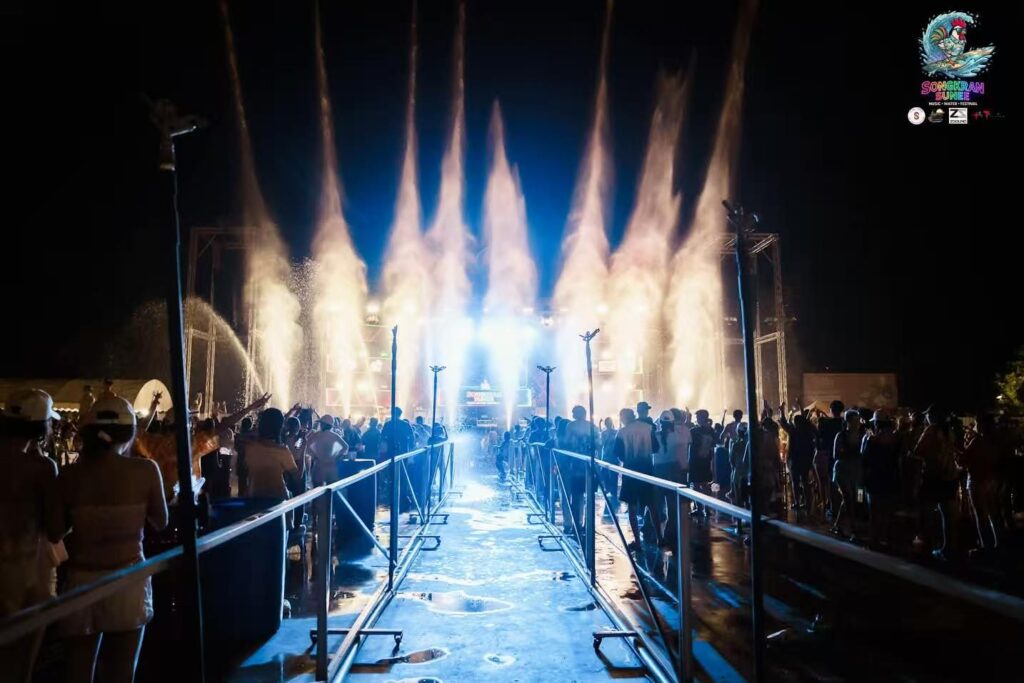
When events transition to the outdoors, weatherproofing becomes the ultimate technical challenge. To protect your investment from unpredictable downpours, deploying IP-rated fixtures is essential. For instance, the LED-D543F waterproof par can boasts an IP65 housing (a standardized classification proving the fixture is completely dust-tight and protected against low-pressure water jets from any direction), making it ideal for wet outdoor stages.
To add sheer raw energy to the stage, programmers can mount the TS-PS300F, a 450W high-power strobe light featuring an IP68 waterproof rating (representing the highest grade of protection against dust and continuous underwater immersion). This fixture delivers blinding flashes and pixel-level horse racing chases, injecting a surging rhythm into the live atmosphere.
Ultimately, achieving a harmonious balance between intense beam graphics and quiet, color-corrected moments is what elevates a standard gig into an unforgettable masterpiece. When executing a professional-grade concert stage lighting design, it is highly recommended to collaborate with professional lighting technicians who can draft customized concert stage illumination schemes tailored specifically to your venue’s unique physical architecture. With the right combination of state-of-the-art moving heads and expert programming, your stage will truly come alive.